 EN
EN

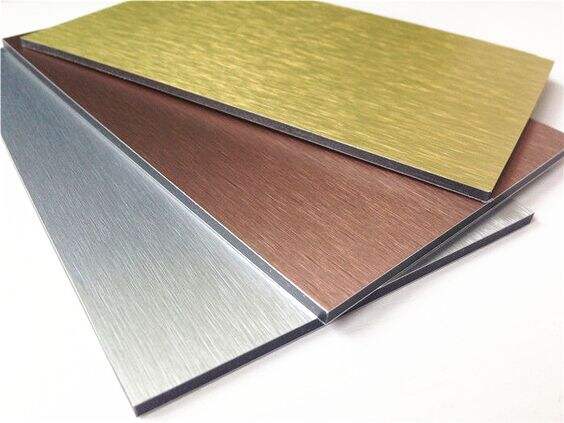
Aesthetic Versatility and Design Flexibility with Alucobond
Expanded Color, Texture, and Finish Options for Modern Architectural Expression
Alucobond empowers architects with exceptional creative latitude through a broad spectrum of colors, textures, and finishes—enabling precise alignment with design intent, brand identity, or contextual harmony. Its standard palette includes over 100 solid colors, complemented by metallic, iridescent, and textured options that respond dynamically to shifting light. Custom color-matching is available for exact specification adherence, whether matching corporate branding or blending with heritage surroundings. All standard finishes feature PVDF (polyvinylidene fluoride) coatings—recognized for outstanding UV resistance and long-term color retention—backed by industry-leading 35-year warranties against fading and chalking. This combination of breadth and durability allows facades to serve as both functional envelopes and intentional artistic statements.
Curved Facades, Parametric Forms, and Custom Profiles Enabled by Alucobond’s Formability
Alucobond’s cold-forming capability supports complex geometries without sacrificing structural performance or surface integrity. With minimum bending radii as tight as 2 meters, it accommodates gentle curves, sweeping arcs, and sculptural undulations—ideal for biomimetic and parametric designs. Fabricators routinely produce site-specific profiles, including tapered, folded, and multi-planar panels, using standard metalworking tools and CNC routing. These techniques extend into perforated screens, embossed surfaces, and integrated shadow lines—enhancing visual depth while preserving weather-tightness and dimensional stability. The result is a facade system that merges expressive form with proven envelope performance.
Structural Performance: Lightweight Rigidity and Dimensional Stability
Maintaining Flatness and Integrity in Large-Scale Alucobond Facade Panels
Alucobond’s sandwich construction—two thin aluminum skins bonded to a rigid polyethylene or mineral core—delivers an exceptional strength-to-weight ratio. This enables large-format panel installations (commonly exceeding 3 meters in height) with minimal support framing, reducing dead load on the primary structure. Its low coefficient of thermal expansion (±0.1% at 80°C) prevents buckling, warping, or joint misalignment across seasonal temperature swings. Tested per ASTM E330, Alucobond withstands wind loads up to 144 psf while maintaining deflection within strict architectural tolerances—typically under L/60—ensuring long-term flatness and visual continuity in curtain wall systems. That consistency is critical for high-precision glazing interfaces and seamless façade articulation.
All-Climate Durability: Alucobond’s Weather Resistance and Long-Term Reliability
UV Stability, Thermal Cycling Resilience, and Freeze-Thaw Endurance
Alucobond’s durability stems from its engineered aluminum skins and high-performance PVDF coating—a system validated through decades of real-world exposure and accelerated testing. The PVDF layer provides superior resistance to UV degradation, eliminating chalking, gloss loss, and color shift even after 35 years of direct sunlight exposure. Unlike organic claddings, it remains dimensionally stable across extreme thermal cycles—from desert heat to arctic cold—without cracking, delaminating, or warping. Its bonded core absorbs and distributes thermal stress, preventing interlayer separation during repeated freeze-thaw cycles. This resilience translates directly into lower lifetime maintenance costs and extended service life—key considerations for institutional, commercial, and civic projects.
Proven Performance in Humid, Coastal, and High-Solar-Exposure Environments
Alucobond performs reliably where many cladding systems falter. In coastal settings, its naturally passive aluminum oxide layer resists salt-spray corrosion—eliminating the need for costly stainless steel fasteners or protective coatings required by ferrous alternatives. In humid and tropical climates, its non-porous, impermeable surface inhibits mold, mildew, and moisture penetration—preventing substrate rot and maintaining hygienic building envelopes. In high-solar-exposure regions, reflective PVDF finishes reduce surface temperatures significantly, lowering conductive heat gain and easing HVAC demand. Supported by 20-year leak warranties and 35-year color retention guarantees, Alucobond’s field-proven performance across diverse global climates reinforces its reputation for long-term reliability.
Technical Compliance and Functional Efficiency of Alucobond Cladding
Fire Classification Options (A2-s1, FR, PE) and Integration with Global Building Codes
Alucobond offers three core fire-performance variants—A2-s1 (non-combustible mineral core), FR (flame-retardant polyethylene core), and PE (standard polyethylene core)—each rigorously tested and classified per EN 13501-1. The A2-s1 variant meets the most stringent European requirements for non-combustibility and low smoke production, making it suitable for high-rise and public buildings under regulations like the UK’s Building Regulations Part B and Germany’s Musterbauordnung. In North America, A2-s1 and FR panels comply with NFPA 285 fire propagation testing when installed in approved ventilated rainscreen assemblies—enabling code-compliant use in Type I and II construction. Architects can confidently specify the appropriate variant based on local jurisdiction, building height, and occupancy type.
Corrosion Resistance, Low Thermal Conductivity, and Ventilated Cavity Energy Benefits
Alucobond’s aluminum composite structure delivers inherent corrosion resistance across industrial, marine, and urban environments—requiring no additional protective treatments. Its thermal conductivity (approximately 0.25 W/m·K) is markedly lower than solid aluminum or steel, minimizing thermal bridging at attachment points. When integrated into a ventilated rainscreen cavity—typically 20–50 mm deep—the system leverages natural convection to dissipate heat and manage moisture, improving overall wall U-values by up to 30% compared to direct-applied cladding. This passive energy strategy contributes meaningfully to operational efficiency and supports sustainability targets, helping projects achieve LEED v4.1 (MR and EA credits) and BREEAM Outstanding ratings—without compromising aesthetic flexibility or installation speed.
FAQ
What are the advantages of Alucobond's color and finish options for architects?
Alucobond provides a vast array of over 100 standard colors, including metallic, iridescent, and textured finishes. It also offers custom color-matching, all with PVDF coatings for superior UV resistance and durability, making it ideal for both creative and functional facade designs.
How does Alucobond enable unique facade forms and geometries?
The material’s cold-forming capabilities and compatibility with standard metalworking tools allow for intricate geometries, such as curves, folded panels, and perforated screens, without compromising surface integrity or structural performance.
How does Alucobond perform under extreme weather conditions?
Alucobond’s PVDF coatings and aluminum skins ensure resilience against UV exposure, thermal cycling, and freeze-thaw cycles, contributing to its long-term reliability across various climates.
What fire classifications does Alucobond offer?
Alucobond provides three core variants: A2-s1 (non-combustible), FR (flame-retardant), and PE (standard), each complying with global building codes and fire performance tests such as EN 13501-1 and NFPA 285.
What sustainability benefits come with Alucobond cladding?
Alucobond cladding reduces thermal bridging, improves wall U-values in ventilated rainscreen systems, and supports certifications like LEED v4.1 and BREEAM Outstanding, thanks to its lower thermal conductivity and passive energy efficiency features.
Table of Contents
- Aesthetic Versatility and Design Flexibility with Alucobond
- Structural Performance: Lightweight Rigidity and Dimensional Stability
- All-Climate Durability: Alucobond’s Weather Resistance and Long-Term Reliability
- Technical Compliance and Functional Efficiency of Alucobond Cladding
-
FAQ
- What are the advantages of Alucobond's color and finish options for architects?
- How does Alucobond enable unique facade forms and geometries?
- How does Alucobond perform under extreme weather conditions?
- What fire classifications does Alucobond offer?
- What sustainability benefits come with Alucobond cladding?