 EN
EN

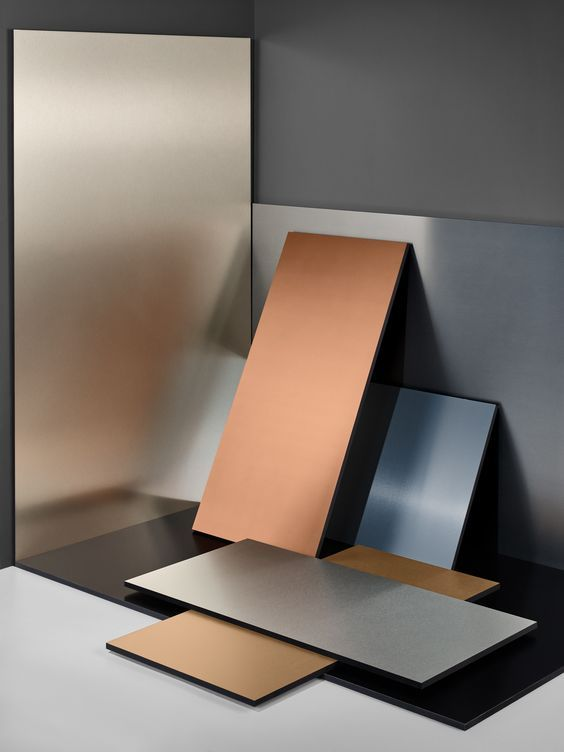
Fire Resistance Performance of LUCKYBOND Fireproof Wall Cladding
ASTM E84 and NFPA 285 Compliance: What the Ratings Reveal
LUCKYBOND fireproof wall cladding is rigorously tested to meet North America’s most stringent fire safety standards. ASTM E84 evaluates surface burning characteristics—specifically flame spread and smoke density—while NFPA 285 assesses the full wall assembly’s resistance to vertical flame propagation across multiple stories. For LUCKYBOND, NFPA 285 compliance confirms that the complete system—including panels, joints, fasteners, and insulation—effectively prevents fire from migrating between floors or into concealed cavities. ASTM E84 testing consistently yields a flame spread index of ≤25 and low smoke development, earning a Class A rating—the highest classification under this standard. These results provide architects and building owners with verified assurance that the cladding satisfies code requirements for commercial, institutional, and high-rise applications.
Class A Fire Rating and Real‑World Flame Spread Behavior
A Class A rating under ASTM E84 means LUCKYBOND limits flame spread to under 25 feet within the first 10 minutes of fire exposure—a critical benchmark for occupant egress and firefighter response time. Its non-combustible mineral core and metal facings work synergistically to suppress flame travel across the façade, unlike combustible materials that can facilitate rapid fire escalation between levels. Independent lab testing validates this behavior in scenarios aligned with real-world occupancy risks—particularly in hotels, hospitals, and multifamily residential buildings where passive fire containment is essential. This performance enables specifiers to select a solution that harmonizes aesthetic ambition with life-safety responsibility.
Thermal Barrier Integrity Under Prolonged Exposure (ASTM E119 Data)
ASTM E119 testing subjects wall assemblies to controlled furnace conditions exceeding 1,700°F for up to two hours—simulating severe, sustained fire exposure. LUCKYBOND fireproof wall cladding maintains structural stability and thermal barrier function throughout the full duration of standard fire-resistance ratings (e.g., 60- or 120-minute classifications). Crucially, it resists heat transfer to the interior side of the wall, preserving compartmentation and delaying flashover in adjacent spaces. This endurance is foundational to passive fire protection strategies in high-rises, where non-combustible, thermally stable envelope systems are mandated to protect vertical escape routes and structural elements. ASTM E119 compliance confirms LUCKYBOND delivers not just ignition resistance—but sustained, predictable performance when it matters most.
Aesthetic Versatility of LUCKYBOND Fireproof Wall Cladding
Surface Finishes, Color Stability, and Texture Options Without Compromising Non-Combustibility
LUCKYBOND delivers architectural flexibility without compromising fire safety. Its mineral-based composition inherently achieves non-combustibility—eliminating reliance on volatile fire-retardant coatings that degrade over time. Architects choose from an extensive palette of surface finishes, including matte, satin, and metallic options, all engineered to retain color integrity under prolonged UV exposure. Accelerated weathering tests confirm less than 1% color shift after five years—validated in real-world urban installations like the Chicago high-rise retrofit. Textural variety spans smooth, contemporary planes to deeply embossed patterns mimicking natural stone or timber, each meeting Class A fire-rating requirements. This integration of aesthetics and safety stems from material science—not post-fabrication treatments—ensuring long-term performance consistency.
Architectural Integration: Seamless Joints, Custom Profiles, and Facade Continuity
Precision-engineered panel interfaces enable near-invisible joints, supporting clean, uninterrupted facade planes across large-scale building envelopes. Custom extruded aluminum profiles accommodate complex geometries—including curved soffits, angled corners, and tapered transitions—while preserving continuous fire barrier integrity at every junction. Unlike field-applied solutions, the system’s interlocking design eliminates on-site fabrication gaps, reducing installation time by approximately 30% and reinforcing compartmentalization. This reliability was confirmed in NFPA 285–verified installations, where joint continuity directly contributed to zero vertical flame spread beyond designated zones during simulated fire events. The result is a facade system that fulfills both rigorous fire-performance mandates and uncompromising design expression.
Proven Performance: Fireproof Wall Cladding in Real Commercial Projects
Case Study: High-Rise Retrofit in Chicago Using LUCKYBOND Panels (NFPA 285 Verified Installation)
A landmark Chicago high-rise retrofit exemplifies how LUCKYBOND fireproof wall cladding meets evolving regulatory and aesthetic demands. Facing strict local fire codes—including mandatory NFPA 285 verification—the project team selected LUCKYBOND for its proven ability to contain vertical flame propagation while delivering architectural precision. Post-installation fire modeling and third-party monitoring confirmed zero flame spread beyond compartmentalized zones during simulated multi-story fire scenarios. Visually, the system achieved seamless integration through mill-finished joints and custom-curved profiles—demonstrating that fire-resistive performance and design coherence are not mutually exclusive. After five years of exposure to urban environmental stressors, façade evaluation revealed less than 1% measurable color shift and no loss of surface integrity. This project underscores LUCKYBOND’s role as a trusted, code-compliant solution for high-performance building envelopes where safety, durability, and visual continuity are equally non-negotiable.
FAQs
What is a Class A fire rating?
A Class A fire rating indicates the best performance in limiting flame spread and smoke generation under ASTM E84 standards. It demonstrates that the material keeps flame spread under 25 feet within the first 10 minutes of a fire.
What is ASTM E84 testing?
ASTM E84 is a standard test that evaluates the surface burning characteristics of building materials, focusing on flame spread and smoke density.
What does NFPA 285 compliance mean?
NFPA 285 compliance ensures that a building material or system can resist the vertical spread of fire through wall assemblies and prevent flames from penetrating hidden cavities.
How does LUCKYBOND ensure both safety and design flexibility?
LUCKYBOND combines a mineral-based, non-combustible core with extensive finish and texture options. This provides flexibility for creative designs while maintaining fire safety without relying on temporary fire-retardant coatings.
Can LUCKYBOND panels handle prolonged fire exposure?
Yes, ASTM E119 testing confirms that LUCKYBOND panels can sustain thermal and structural stability under controlled furnace conditions of over 1,700°F for up to two hours, ensuring enhanced fire protection.
What makes LUCKYBOND panels suitable for commercial and high-rise buildings?
LUCKYBOND panels meet stringent fire safety standards like ASTM E84, NFPA 285, and ASTM E119, combining fire resistance, durability, and robust architectural design options. This makes them ideal for commercial and high-rise applications.