 EN
EN

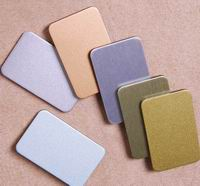
UV Resistance and Color Stability in LUCKYBOND Aluminum Composite Material
Sustained visual appeal of any aluminum composite material depends on how well it resists the sun’s relentless energy. Facades subjected to constant UV flux can lose vibrancy within months if coatings lack engineered photostability. The sections below examine the molecular design and certified validation that enable this material to retain its original appearance far longer than conventional cladding products.
Science Behind UV-Stable Polyester and PVDF Coatings
The core defense lies in polymer chemistry. PVDF (Polyvinylidene Fluoride) coatings owe their resilience to carbon–fluorine bonds—the strongest in organic chemistry—which resist photolytic cleavage far better than the carbon–hydrogen bonds in standard paints. When UV photons strike a PVDF surface, the fluorinated matrix re-emits most energy as harmless heat, preventing chain scission, chalking, and color shift. UV-stable polyester coatings, meanwhile, rely on hindered amine light stabilizers (HALS) and UV absorbers that sacrificially intercept radicals before they degrade the polymer backbone. This dual-mechanism approach keeps the surface chemically inert under solar exposure. Field studies show premium PVDF-coated panels maintain over 90% of their original color after two decades outdoors, while high-quality UV-stable polyester systems deliver strong performance in moderate-sun environments—keeping ΔE values below 2 for more than 10 years. This molecular shielding prevents the fading and gloss loss that plague lesser cladding, giving architects confidence in long-term aesthetics.
Accelerated Weathering Validation: QUV and Xenon Arc Results (ΔE < 1.5 after 5,000 hrs)
Laboratory simulation proves the durability claims. Using QUV and Xenon arc chambers per ASTM G154 and G155, samples undergo cycles of intense UV radiation, moisture, and heat that replicate years of outdoor exposure in weeks. After 5,000 hours—equivalent to roughly 10–15 years of natural Florida-grade sunlight—color change (ΔE) remains below 1.5, well beneath the 3–5 threshold visible to the human eye. Gloss retention exceeds 70%, confirming the finish stays smooth and reflective rather than dulling. Xenon arc filtering replicates natural daylight closely, exposing latent instability in pigments or resin. Pull-off adhesion tests post-weathering show no delamination. These results, consistent with 2023 outdoor exposure data, validate that the protective layer doesn’t merely delay fading—it virtually stops it for the building’s service life, ensuring the aluminum composite material remains vivid and clean-looking through decades of sun and storm.
Corrosion and Environmental Durability of LUCKYBOND Aluminum Composite Material
Marine-Grade Aluminum Alloy Core with Anodized Protection
The long-term aesthetic appeal of an aluminum composite material begins at its core. Premium panels use marine-grade alloys—typically 5005A or 5052—selected for inherent oxidation resistance. This foundation is enhanced through anodization: an electrochemical process that thickens the metal’s natural oxide layer into a super-hard, transparent ceramic film integral to the aluminum, so it cannot peel or flake. This shield delivers exceptional resistance to pitting and etching from airborne salts, acid rain, and industrial pollutants. Crucially, the polymer core acts as a moisture barrier, preventing wicking from the back side—a common cause of internal corrosion that compromises front-side finish integrity.
Freeze-Thaw and Thermal Cycling Resilience (ASTM D6941 Verified)
Visual integrity depends on flatness—and flatness requires resilience against thermal movement. The aluminum composite material is engineered with a balanced cross-section, enabling the aluminum skins and polymer core to expand and contract as a unified system. This integration is essential in climates where façades swing from sub-zero cold to direct solar heat in a single day. Panels lacking this cohesion risk “oil-canning”—a visible waviness that destroys clean aesthetics. ASTM D6941 thermal cycling protocols verify bond integrity and core stability, confirming no delamination or creep-induced deformation. Its low coefficient of thermal expansion ensures permanent flatness, preserving architectural precision and eliminating unsightly deflections.
Factory-Applied Coating Systems Ensuring Long-Term Finish Integrity
Coil-Coated PVDF vs. Electrostatic Powder: Adhesion, Crosslink Density, and Gloss Retention
For aluminum composite material, the factory-applied coating system fundamentally determines long-term visual integrity. Coil-coated polyvinylidene fluoride (PVDF) finishes—applied under stringent, controlled conditions—consistently outperform electrostatic powder coatings. Adhesion testing per ASTM D3359 yields a 5B rating (no coating loss) for PVDF, whereas many powder alternatives show edge lifting. Crosslink density—a direct indicator of durability—is significantly higher in PVDF; standardized MEK double-rub tests confirm over 200 cycles without breakthrough, compared to fewer than 100 for typical powder coats. This dense, thermodynamically cured network directly supports gloss retention: accelerated weathering shows PVDF maintains above 85% of its initial 60° gloss after 5,000 hours in QUV, while powder finishes often fall below 70% due to resin degradation. The precision of factory coil application ensures uniform film thickness and complete crosslinking—delivering a finish that resists chalking, fading, and peeling for decades.
Sustained Visual Performance Through Low-Maintenance Care
Non-Abrasive Cleaning Protocols and Their Role in Preserving Aesthetic Integrity (ASTM D523)
The aesthetic longevity of aluminum composite material cladding hinges on simple, non-abrasive maintenance. A solution of mild pH-neutral detergent and water, applied with a soft microfiber cloth, effectively lifts dirt without scratching the coating. Quarterly cleaning with this gentle regimen—using a soft brush or cloth followed by a low-pressure water rinse—is typically sufficient to preserve like-new appearance. Avoiding abrasive pads and harsh chemicals prevents irreversible micro-scratches, the primary cause of gloss loss. ASTM D523 gloss-retention testing confirms that panels maintained this way retain over 90% of their original specular gloss after extensive weathering. This low-effort protocol preserves vibrancy, reduces long-term ownership costs, and supports sustainable building practices by extending façade component life cycles.
FAQ
What is PVDF coating, and how does it improve UV resistance? PVDF coating is a polymer finish based on polyvinylidene fluoride, known for its carbon–fluorine bonds. These bonds resist UV degradation effectively, preventing fading and color shift, which ensures long-term visual performance.
How is the durability of LUCKYBOND Aluminum Composite Material tested? Its durability is validated through accelerated weathering tests like QUV and Xenon arc chambers, simulating years of exposure in weeks. These tests confirm minimal color change and gloss retention.
Why is thermal cycling resilience important in aluminum composite materials? Thermal cycling resilience ensures the material retains its flatness and structural integrity despite temperature fluctuations, preventing deformations like oil-canning.
How does anodization protect the aluminum core? Anodization thickens the natural oxide layer, forming a hard, transparent ceramic film that resists corrosion and ensures the aluminum retains its structural and aesthetic properties.
Which cleaning protocol helps maintain the material's appearance? Regular cleaning with pH-neutral detergent and a soft microfiber cloth preserves the material's gloss without causing micro-scratches, ensuring long-term aesthetic integrity.
Table of Contents
- UV Resistance and Color Stability in LUCKYBOND Aluminum Composite Material
- Science Behind UV-Stable Polyester and PVDF Coatings
- Corrosion and Environmental Durability of LUCKYBOND Aluminum Composite Material
- Factory-Applied Coating Systems Ensuring Long-Term Finish Integrity
- Sustained Visual Performance Through Low-Maintenance Care
- FAQ