 EN
EN

Superior Performance: Durability, Weight Efficiency, and Urban Resilience
Weather Resistance and Long-Term Structural Integrity in High-Traffic Urban Environments
ACM panels thrive in the demanding conditions of dense urban settings. A high-performance PVDF coating forms a durable barrier against acid rain, airborne pollutants, and intense UV exposure—effectively preventing fading, chalking, and gloss loss for decades. Beneath this surface, aerospace-grade aluminum alloy resists corrosion even under salt spray, freeze-thaw cycles, and extreme temperature swings from –50°F to 200°F. Independent testing confirms premium ACM systems retain over 90% of original color after 15 years of vertical exposure—data validated by ASTM D2244 and ISO 11341 accelerated weathering protocols. The non-combustible, mineral-filled core contributes rigidity without moisture absorption, eliminating risks of delamination, blistering, or warping. In high-traffic zones subject to footfall, vehicle vibration, and wind-induced micro-stress, this multi-layered construction dampens resonance and inhibits fatigue cracking. The result is dimensional stability and aesthetic integrity for 30+ years—even on 40-story towers adjacent to busy highways—significantly reducing long-term maintenance and total cost of ownership.
Lightweight Design Advantages: Faster Installation, Reduced Structural Load, and Lower Lifecycle Costs
Weighing just 1.1 to 1.5 pounds per square foot, ACM panels are up to 50% lighter than solid aluminum sheets and roughly one-third the mass of precast concrete or natural stone cladding. This dramatic weight reduction directly lowers structural demand: engineers routinely optimize beam sizes, foundation depths, and seismic bracing—shortening schedules and cutting material costs. Installation requires no cranes; crews handle large 5’ × 12’ panels using scaffolding and track-guided lifting systems. A single team typically installs 800–1,200 sq ft per day—nearly double the rate of heavier rainscreen alternatives. Over time, reduced loading minimizes creep at connections and thermal movement joints, lowering inspection frequency and repair outlays. Freight efficiency also improves: a full truckload of ACM covers ~30% more facade area than an equivalent weight of fiber cement board. When combined with faster enclosure, leaner structural design, and diminished lifecycle maintenance, ACM delivers compelling economic value—making it a first-choice solution for owners prioritizing speed, resilience, and long-term value.
Unmatched Aesthetic Versatility: Customization, Brand Alignment, and Surface Innovation
Color, Texture, and Finish Options — Including Metallics, Digital Prints, and Bespoke Coatings
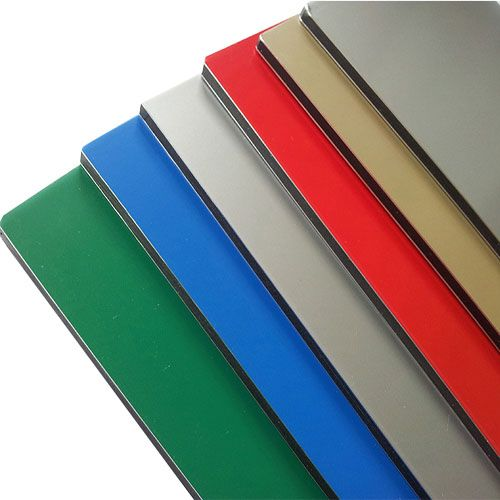
ACM panels unlock exceptional design flexibility—enabling architects to transcend traditional material limitations. Modern systems offer high-gloss metallics, brushed steel effects, matte wood grains, and realistic stone textures—all without the weight, inconsistency, or upkeep of natural materials. Digital printing technology applies photo-realistic imagery, gradients, and custom patterns directly to the aluminum surface, supporting truly unique façade expressions. Bespoke fluoropolymer and nano-ceramic coatings deliver vibrant, fade-resistant color while enhancing scratch and graffiti resistance—critical for maintaining visual integrity in high-visibility urban locations. Supported by industry data showing 68% of specifiers rank finish variety among their top three selection criteria (2023 Architectural Products Specifier Survey), ACM merges limitless aesthetic potential with proven performance—transforming commercial exteriors into distinctive, enduring landmarks.
Precision Branding Through Engineered ACM Surfaces for Consistent Corporate Identity
For organizations committed to cohesive brand expression, ACM serves as a precision-engineered canvas for corporate identity. Leading manufacturers match exact PMS colors and embed logos, taglines, and graphic elements via high-resolution digital printing—or through CNC routing and embossing for tactile dimensionality. This integration eliminates standalone signage, reducing visual clutter and ongoing maintenance. Crucially, consistency is guaranteed across global deployments: a single digital master file ensures identical hue, texture, and graphic placement whether panels are installed in New York, Singapore, or São Paulo. The result is a durable, weather-resistant façade that functions as both architectural envelope and branded asset—reinforcing recognition, credibility, and professionalism for decades without fading, peeling, or degradation.
Safety, Compliance, and Sustainability: Fire Performance and Thermal Efficiency of ACM
As commercial façades evolve, life safety and energy performance have become non-negotiable. Aluminum composite material (ACM) systems meet these dual imperatives through strategic core selection and integrated thermal management—aligning with current building codes, fire standards, and sustainability frameworks.
Core Material Selection (PE, FR, Mineral-Filled) and NFPA 285 Compliance for High-Rise Commercial Projects
Fire performance hinges entirely on core composition. Polyethylene (PE) cores—while cost-effective—are combustible and restricted to low-rise applications under most codes. Fire-retardant (FR) cores slow ignition but do not eliminate flame spread. For high-rise commercial buildings, mineral-filled cores—typically formulated with aluminum hydroxide or magnesium hydroxide—are required to achieve true non-combustibility. These cores enable ACM assemblies to pass NFPA 285, the full-scale wall assembly test mandated by the 2021 International Building Code for structures exceeding 40 feet (12.2 m). NFPA 285 simulates interior flashover and measures vertical/horizontal flame propagation across the entire wall system—including insulation, air barriers, and attachment methods. Specifiers must verify that the complete assembly—not just the panel—is certified. Leading manufacturers provide tested, code-compliant systems with mineral-filled ACM that demonstrate minimal smoke development and no sustained flaming—supporting safe egress and firefighter response.
Thermal Break Integration and Energy-Efficient Facade Design with ACM Systems
While ACM provides a sleek, durable outer layer, its metal framing can act as a thermal bridge—undermining insulation and increasing HVAC demand. Integrating thermal breaks—non-conductive materials placed between the panel and structural support—disrupts this conductive path. Many modern ACM systems incorporate factory-applied thermal breaks that maintain cavity depth for drainage and ventilation while isolating the exterior cladding from interior framing. This design supports compliance with energy standards such as ASHRAE 90.1, helping projects meet minimum R-value requirements for commercial enclosures. In cold climates, thermal breaks also mitigate condensation risk and freeze-thaw damage—extending façade service life. When paired with a low-thermal-conductivity mineral-filled core, thermally broken ACM systems contribute meaningfully to higher effective R-values, reduced operational carbon, and eligibility for green building certifications including LEED and BREEAM.
FAQ
What are ACM panels?
ACM panels, or Aluminum Composite Material panels, consist of a lightweight core sandwiched between two aluminum sheets, offering durability, aesthetic versatility, and weather resistance in building facades.
Why are lightweight ACM panels advantageous?
Being lightweight reduces structural load, accelerates installation, and lowers long-term maintenance costs while enhancing transportation efficiency.
Are ACM panels fire-safe?
Yes, ACM panels with mineral-filled cores meet strict fire safety codes, including NFPA 285 compliance, ensuring non-combustibility for high-rise buildings.
How do ACM panels contribute to energy efficiency?
ACM panels integrate thermal breaks and low-conductivity cores, minimizing thermal bridging and enhancing insulation, which aids in achieving energy standards like ASHRAE 90.1 and LEED certification.
What customization options do ACM panels offer?
ACM panels provide extensive customization, including metallic finishes, digital prints, textured surfaces, and tailored corporate branding features for unique architectural designs.