 EN
EN

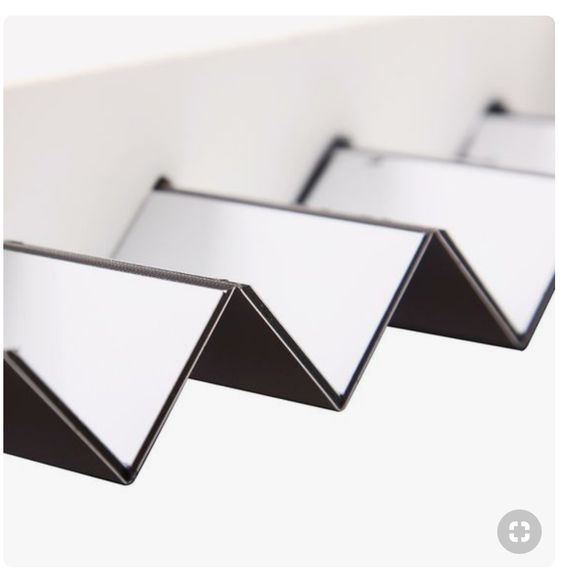
LUCKYBOND ACM Core Composition and Its Fire Resistance Mechanism
Mineral-Filled FR-Core vs. Combustible PE-Core: Thermal Stability and Flame Spread Behavior
The aluminum composite material (ACM) panels have protective layers and special cores which provide distinct functions. These panels have mineral-filled fire-retardant (FR) cores which have fire-resistant components like alumina trihydrate or magnesium hydroxide. PE cores rely on the meltdown and flow of the core which allows fire to wick and spread. Such cores can create excess heat of over 500 kW per square meter as per ASTM E84. In contrast, the chemically manufactured FR cores will contain the fire and not contribute to the spread. Instead, they utilize endothermic processes that absorb heat and release fire-retardant water vapor, and keep the temperature below 300 degrees Celsius, regardless of the heat level. This protects structural components of the building longer despite PE cores failing within 90 seconds. Additionally, data reinforces this claim.
ACM with FR cores generally has fire spread ratings of less than 25, earning them a Class A rating, while PE cores exceed 200 and are rated Class C. Testing conducted in accordance with NFPA 285 demonstrates that fire spreads across FR core materials approximately eight times slower than it does across PE cores.
EN 13501-1 Test Data: Quantifying Reaction-to-Fire Performance of LUCKYBOND ACM
Per EN13501-1, LUCKYBOND ACM panels, as a result of passing rigorous testing as a result of having a calorific value of less than 3 MJ, and SMOGRA testing having an optical density of less than 50%, has a rating of Class A2-s1, d0. Thus, allowing LUCKYBOND ACM panels to be classified as having the best pyro-technical reaction rating available for any composite product. Because of these ratings, LUCKYBOND ACM panels have real life applications, including tall buildings, where safety and ability to suppress a fire to aid evacuations and/or to save lives can be best utilized. It's worth noting that LUCKYBOND ACM panels produce no flaming droplets / no flowed dripping during vertical burn testing as are conducted during SMOGRA testing, and have a maximum of 5% CO emission, a far cry above the the 35 MJ loss per square meter over 35 MJ loss per square meter that is common with other composite products. It is these benefits that separate LUCKYBOND ACM panels from the competition.

Compliance with Global Fire Safety Standards for LUCKYBOND ACM
Class A2-s1,d0 Explained: It's Importance for ACM Cladding in High Rise Buildings
The EN 13501-1 A2-s1,d0 classification is the highest level of ACM cladding for fire safety and indicates the following:
A2: Non combustible materials, with total heat release ≤20 MJ/kg and a peak heat release rate of ≤100 kW/m².
s1: Low smoke production at <750%·min/m² (measured by)
optical density).
d0: No flaming droplets in a 600 second test.
The 2021 IBC (International Building Code) updated its building codes to address fire safety with regards to vertical building components, particularly for structures that are at least 18 meters in height. The 'chimney effect' causes fires to spread rapidly on vertical building surfaces. LUCKYBOND ACM is A2-s1,d0 rated and acts to alleviate this issue. These materials help prevent fire spread and offer a higher level of safety for building occupants as they produce less smoke during and following evacuations. The dangers of cladding that does not comply with building codes is well documented. Research published in NFPA Journal documents the extremely rapid fire spread due to the use of unapproved fire rated materials.NFPA 285 Full Assembly Testing: Summary, Shortcomings, and Facade Performance in Practice
NFPA 285 tests fire spread over complete wall assemblies, not single panels, and mimics multi-story fire scenarios. For Type I–IV construction, it is required for combustible wall exterior sheathing per IBC Section 1403. Nevertheless, realism is affected by the following caveats.
Test Consideration Implications for ACM Specs
Assembly-Specific Validation Pass/fail is limited to the system of cladding, insulation, and moisture barriers for the test
Component Interdependence Changes to sealants, fasteners, or insulation may void the certification
Regional Variability There may be local testing requirements in addition to the NFPA 285.
Therefore, NFPA 285 compliance is project specific. For LUCKYBOND ACM integration, the following is required:
Architects: system-specific certified documentation
Contractors: installation of only the specified components, and
Building Officials: documentation proving the assemblies are equal.
Even with the caveats, NFPA 285 is still critical for combustible construction. Full-assembly testing is found to be 78% more effective in slowing the vertical spread of flames than testing individual components (UL Fire Council, 2022). Specifiers need to focus on ACM options with system-level NFPA 285 certification.
LUCKYBOND ACM and Standard PE-Core ACM Panels Fire Performance Comparison
Difference in HRR, THR, and Smoke Toxicity based on ASTM E136 and ISO 5660
Testing reveals sharp distinctions in fire reaction of ACM materials: core PE vs. core mineral slabs. Per ASTM E136, mineral cores pass non-combustibility while PE cores ignite easily. ISO 5660 test results show this even more clearly. During fire, mineral cores release 60-70% less heat than PE cores. Even in smoke toxicity emissions, mineral cores perform relatively better, reducing smoke toxicity by 50% as opposed to PE cores. What's more, mineral cores do not contain halogens in their fire retardants, making them safer than PE cores and okay for building applications. Reason? Water vapor and oxidations processes. PE cores drip, melt feed fire. Mineral cores cool the fire down.Practicalities Involved in Fire-Resistant ACM in B2B Assignments
Commercial fire-resistant ACM projects require third-party certifications to document that their products meet relevant local building codes. Certifications should include the EN 13501-1 classification as A2-s1, d0 and the NFPA 285 test at the system level. In fire situations, cores that are mineral filled are superior to those that are polyethylene filled because they comply with ASTM E136 and ISO 5660 which measure the rate of flame spread, heat produced, and the volume of smoke generated. In fire scenarios, the way each element fits together is more critical than the materials used. Therefore, building assembly test reports are more important than the materials used. The records become critical for certification and liability protection for the supply chain, from the factory to the point of installation.
FAQ
What are the fire-rated ACM panels and how do they differ from the normal ACM panels?
The fire-rated ACM panels have an inner core of fire-retardant, non-combustible minerals, such as alumina trihydrate or magnesium hydroxide, which provide better thermal stability and flame spread, in contrast to the PE cores of the normal ACM panels which are highly combustible.
What about fire resistance makes LUCKYBOND ACM different from the rest?
The fire resistance of LUCKYBOND ACM panels is classified as A2-s1,d0, making the panels comply with the EN 13501-1 standards, which makes it one of the best composite materials as it has low smoke production, no flaming droplets, and low heat release.
Why is the A2-s1,d0 classification significant in tall buildings?
The A2-s1,d0 classification denotes that the material is non-combustible, meaning it will not sustain an flame and smoke elements which is very important in tall buildings with the fire chimney result in the vertical element in the building.
What is the NFPA 285 and why is it important?
NFPA 285 is the standard that tests the spread of fire in wall systems, providing an understanding on how the wall systems behave in multiple floors fire situations, which is critical in designing buildings with high fire risk.