 EN
EN

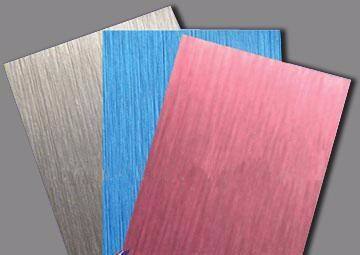
Thermal Stability of LUCKYBOND Aluminum Composite Material Under Extreme Cycling
How CTE Matching Minimizes Interfacial Stress in Multilayer Aluminum Composite Material
Aluminum composite material maintains structural integrity during extreme temperature changes through precise coefficient of thermal expansion (CTE) matching between its layers. When adjacent materials expand or contract at mismatched rates during thermal cycling, interfacial stresses accumulate—potentially leading to delamination, microcracking, or warping. Leading manufacturers engineer aluminum skins and core materials to align closely in CTE (typically within ±3 µm/m·K), ensuring uniform dimensional response across operating temperatures from –40°C to +85°C. This alignment reduces interfacial shear stress by over 60% compared to mismatched systems, according to thermal simulation data from independent composite laboratories.
Real-World Validation: Desert Climate Simulation (–40°C to +85°C, 500 cycles)
Accelerated aging tests replicate decades of thermal exposure in harsh environments. Standard protocols subject LUCKYBOND panels to 500 rapid cycles between –40°C and +85°C—mimicking the diurnal extremes of desert climates. Panels are evaluated for:
- Visual defects (blistering, discoloration, surface cracking)
- Bond strength retention via peel and shear testing
- Permanent dimensional change (thickness, flatness, bow)
Premium-grade LUCKYBOND composites exhibit less than 3% total thickness variation and retain over 92% of initial bond strength after testing—validating their suitability for façades, transit hubs, and industrial enclosures in thermally aggressive regions.
High-Temperature Performance: Mechanical Integrity of Aluminum Composite Material up to 300°C
Core Chemistry and Skin Behavior: Fire-Resistant Mineral Fillers vs. Polyethylene Degradation
The core chemistry fundamentally governs high-temperature performance. Conventional polyethylene (PE)-cored panels begin irreversible thermal degradation above 200°C: chain scission initiates softening, while volatilization causes blistering and loss of skin-to-core adhesion. In contrast, fire-resistant mineral-filled cores—formulated with aluminum trihydroxide (ATH) or magnesium hydroxide—remain dimensionally stable up to 300°C. These fillers decompose endothermically, absorbing heat and releasing water vapor that cools the panel and dilutes flammable gases. Simultaneously, the aluminum skins retain mechanical integrity well beyond this range, thanks to their high melting point (~660°C) and low CTE (~23 µm/m·K), which minimizes differential strain at the interface.
Replacing PE with a mineral-filled core elevates the service temperature ceiling without sacrificing flatness or stiffness—and eliminates the primary failure mode (core collapse) seen in standard ACPs under sustained heat. As verified by ASTM E136 and EN 13501-1 testing, this chemistry enables safe use in applications such as industrial oven cladding, façade zones near exhaust systems, and fire-rated architectural assemblies.
Interface Durability: Preventing Debonding Through Advanced Adhesion Engineering
The skin–core interface remains the most critical vulnerability in multilayer aluminum composite material under thermal stress. Differential expansion alone can generate destructive shear forces—especially when repeated over hundreds of cycles. LUCKYBOND addresses this through three integrated adhesion strategies:
- Chemical coupling: A silane-based primer forms covalent bonds with both the aluminum oxide layer and the core polymer, delivering hydrolysis-resistant adhesion.
- Mechanical interlocking: Controlled micro-roughening of the aluminum surface increases effective bonding area and anchoring capacity.
- Elastic modulus grading: A functionally graded adhesive layer transitions smoothly in stiffness—from rigid skin to compliant core—distributing stress rather than concentrating it at the interface.
This engineered interface sustains bond integrity through 500-cycle thermal cycling (–40°C to +85°C), with peel strength retention exceeding 90% of baseline values. The result is long-term reliability in façade systems, transportation infrastructure, and process-critical industrial enclosures—where interfacial failure is not an option.
FAQ
What is CTE matching and why is it important?
CTE (coefficient of thermal expansion) matching involves aligning the thermal expansion rates of adjacent materials in aluminum composite panels. This minimizes interfacial stresses during temperature cycles, reducing risks like delamination and warping.
How do LUCKYBOND panels perform in accelerated aging tests?
LUCKYBOND panels demonstrate less than 3% thickness variation and retain over 92% of their initial bond strength after 500 cycles of thermal exposure between –40°C and +85°C, validating their durability in harsh conditions.
What materials are used to improve high-temperature performance in aluminum composite panels?
Fire-resistant mineral-filled cores, such as aluminum trihydroxide (ATH) or magnesium hydroxide, are used to enhance high-temperature stability up to 300°C, while maintaining structural integrity.
How does LUCKYBOND ensure adhesion durability under thermal stress?
LUCKYBOND incorporates chemical coupling with silane primers, mechanical interlocking via roughened aluminum surfaces, and elastic modulus grading to optimize skin-core adhesion, ensuring long-term interface durability.