 EN
EN

The critical importance of fire safety in public architecture
Designing modern public infrastructure demands an uncompromising approach to life safety, structural resilience, and regulatory compliance. High-traffic venues such as airports, shopping malls, hospitals, and high-rise educational institutions host thousands of occupants daily, making fire prevention the foundational element of the architectural planning process. When a thermal crisis occurs, the materials enveloping a building dictate how quickly a fire spreads and how much toxic smoke is generated. Standard decorative paneling can inadvertently act as fuel, accelerating a disaster within minutes. Choosing verified fireproof wall cladding is no longer just a design preference; it is a critical life-saving strategy that protects public well-being, minimizes property destruction, and satisfies the rigid legal requirements of municipal planning departments worldwide.
The science behind high-performance mineral core technology
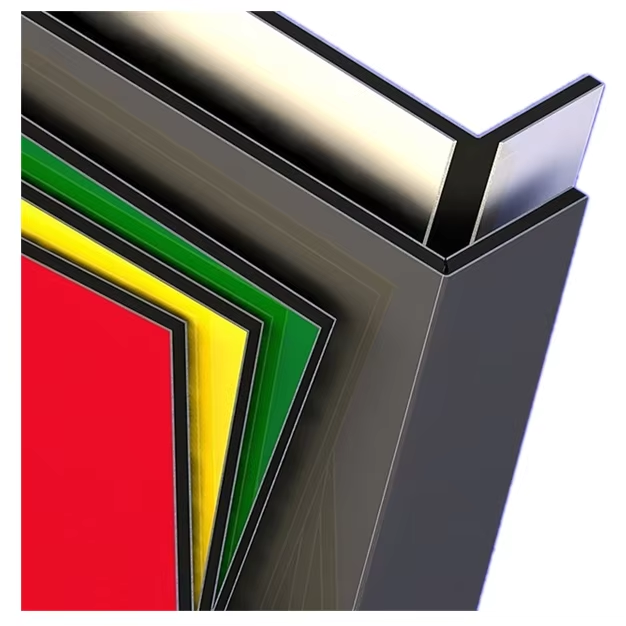
The exceptional safety profile of a premium fireproof wall cladding system lies deep within its structural composition. Traditional aluminum composite panels utilized standard low-density polyethylene cores, which offered structural flexibility but posed significant fire risks due to their flammable nature. Modern architectural engineering solves this vulnerability by substituting synthetic polymers with non-combustible mineral-filled cores, typically composed of magnesium hydroxide or aluminum trihydrate. Under extreme thermal stress exceeding 300°C, these mineral cores undergo a chemical reaction that releases chemically bound water molecules. This process actively cools the surface of the panel, dilutes surrounding combustible gases, and forms a robust char barrier that halts further flame penetration, ensuring the structural core does not contribute to the fire load.
Technical specification matrix for architectural compliance
To assist project engineering teams and municipal inspectors in verifying material capabilities, the primary performance benchmarks for top-tier cladding systems are outlined below:
| Technical Metric | Regulatory Standard | Performance Output | Primary Safety Benefit |
| Reaction to Fire | EN 13501-1 | Class A2-s1, d0 / Class B | Non-combustible, zero flaming droplets |
| Surface Burning | ASTM E84 | Class A Rating (Flame Index < 25) | Minimal flame spread across large facades |
| Smoke Toxicity | NFPA 285 | Passed Full-Scale Wall Assembly | Prevents vertical fire propagation |
| Core Composition | High-Mineral Core | Over 90% Non-Combustible Content | Suppresses smoke generation under heat |
Real-world performance under extreme environmental stress
In real-world applications, building facades must endure severe physical testing long before a fire ever occurs. During a recent structural assessment of an international airport terminal expansion project, engineering teams noted that the exterior envelope faced a dual challenge: extreme seasonal temperature fluctuations and intense wind-load pressures. Installing a high-performance fireproof wall cladding system ensured the building envelope maintained total dimensional stability without warping or cracking. This structural integrity proves invaluable during actual emergencies; when panels remain securely anchored to the sub-structure despite high winds and intense heat, they prevent the chimney effect—a dangerous phenomenon where fire races unchecked through internal wall cavities.
Longevity, financial optimization, and commercial value
Investing in elite-tier fire-rated materials delivers profound commercial advantages that positively impact a project’s long-term financial health. While non-certified materials might appear cost-effective during the initial procurement phase, they frequently lead to exorbitant insurance premiums, strict regulatory fines, and eventual mandatory retrofits. Certified fire-resistant systems insulate asset owners from these financial liabilities. Furthermore, top-grade architectural panels are coated with premium fluoropolymer resins like PVDF, which grant superior resistance to UV degradation, chemical pollution, and atmospheric corrosion. This means the building maintains its pristine aesthetic appeal for decades, reducing routine exterior maintenance costs and significantly enhancing the commercial valuation of the real estate asset.
Industrial precision and global supply chain dependability
Deploying these advanced architectural systems on a global scale requires a manufacturing partner backed by sophisticated production technology and reliable logistical frameworks. This is where LUCKYBOND establishes its reputation as an industry leader. By utilizing automated continuous extrusion lines, strict multi-stage quality control protocols, and comprehensive batch testing, LUCKYBOND guarantees that every production run complies with stringent international safety standards. The brand's integrated supply chain capabilities allow for seamless material customization, precise thickness calibration, and timely international delivery for large-scale developments. Partnering with a specialized manufacturer like LUCKYBOND ensures that public buildings achieve the ultimate harmony of visionary design, long-term durability, and uncompromised public safety.
Table of Contents
- The critical importance of fire safety in public architecture
- The science behind high-performance mineral core technology
- Technical specification matrix for architectural compliance
- Real-world performance under extreme environmental stress
- Longevity, financial optimization, and commercial value
- Industrial precision and global supply chain dependability