 EN
EN

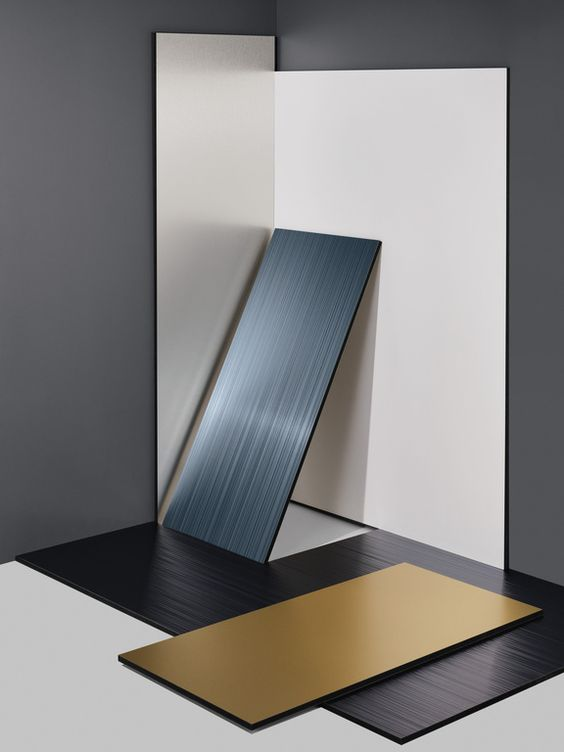
Exceptional Weather Resistance and Long-Term Durability for Outdoor Signage
UV Stability and Corrosion Resistance in Extreme Climates
Aluminum composite panels (ACP) excel in harsh outdoor environments where high UV flux, salt spray, and moisture rapidly degrade conventional sign substrates. Their factory-applied fluoropolymer (PVDF) topcoat reflects up to 80% of UV and infrared radiation—slowing photodegradation and preserving color integrity. Cross-linked at high temperature during manufacturing, this coating forms a dense, durable barrier that resists chalking, fading, and gloss loss. Per AAMA 2605 testing standards, PVDF-coated ACPs retain over 90% of original color after 10 years of accelerated south Florida exposure—a rigorous proxy for decades of tropical service life.
The aluminum skins further enhance resilience: their low thermal expansion coefficient (~23 µm/m·°C) minimizes stress from daily temperature swings, reducing risk of cracking or delamination in desert heat or arctic cold. In coastal zones, the non-hygroscopic polyethylene core and anodized or coated aluminum surfaces inhibit corrosion—leveraging aluminum’s natural self-passivating oxide layer to limit annual metal loss to less than 0.004 mm. Even under monsoon conditions, moisture absorption stays below 0.2% by weight, preventing warping, swelling, or mildew. This dual defense—UV-stable aesthetics and rust-free structural integrity—makes ACP a proven, low-maintenance substrate for permanent outdoor signage.
ASTM D635 & ISO 4892-3 Test Performance vs. Industry Benchmarks
Independent testing confirms ACP’s performance leadership across critical durability metrics. Under ASTM D635, fire-retardant-core ACP achieves a horizontal burn rate below 40 mm/min and self-extinguishes within 10 seconds—meeting Class A fire safety requirements, unlike standard polyethylene-core variants. In ISO 4892-3 xenon arc weathering tests, PVDF-coated ACP maintains a Delta E color shift of just 1.2 after 3,000 hours—far superior to uncoated aluminum and rigid PVC, both of which exceed Delta E 5.0 with visible chalking and gloss loss. Gloss retention remains above 85%, ensuring brand-critical graphics stay crisp and legible throughout service life. These results validate ACP as a technically superior, safety-compliant choice for long-term outdoor signage applications.
Lightweight Aluminum Composite Panel Construction Enhances Installation Efficiency and Structural Reliability
The lightweight yet rigid construction of aluminum composite panel fundamentally improves installation speed, labor efficiency, and long-term structural reliability—without compromising wind-load capacity or impact resistance.
Optimized Weight‑to‑Strength Ratio: 3.5 mm LUCKYBOND ACP vs. PVC, Steel, and Fiberglass
A 3.5 mm LUCKYBOND ACP weighs approximately 2.5 lb/ft²—roughly half the mass of steel at comparable thickness—yet delivers exceptional flatness and flexural rigidity thanks to its sandwich architecture: two thin aluminum skins bonded to a stable polyethylene core. This balance enables large-format signs to withstand environmental stress while minimizing dead load on mounting structures.
| Material (≈3.5 mm) | Weight (lb/ft²) | Flexural Rigidity | Weight‑Strength Benefit |
|---|---|---|---|
| LUCKYBOND ACP | 2.5 | Excellent flatness | Best overall |
| Solid PVC | 2.8 – 3.2 | Low – prone to warp | Poor |
| Steel sheet | 4.9 – 5.1 | Very high but heavy | Moderate |
| Fiberglass panel | 1.8 – 2.2 | Good but brittle | Fair |
This combination of light weight and dimensional stability makes ACP ideal for tall, freestanding, or façade-mounted signage where wind loading, transport logistics, and structural support are key design constraints.
Reduced Labor, Scaffold Use, and On‑Site Handling Time
Because a single worker can comfortably lift and position a full 4×8 ft ACP sheet, installations require smaller crews and minimal heavy-lift equipment. The low panel weight eliminates dependence on extensive scaffolding or cranes during vertical mounting—cutting setup time and site preparation costs. Pre-cut, pre-drilled, or custom-fabricated panels further reduce field adjustments, enabling signage projects to be completed 35–40% faster than with steel or PVC alternatives. Streamlined handling also lowers physical strain and safety risks, supporting consistent, high-quality execution across diverse job sites.
Premium Surface Quality for High-Fidelity Brand Signage Printing
The visual authority of branded signage hinges on precise, consistent reproduction—and aluminum composite panel is engineered from the ground up to deliver uncompromising print fidelity at scale.
Pre-Treated, Smooth Surface Enabling Crisp Digital Printing at 1440+ dpi
Modern high-resolution digital printing demands a substrate with molecular-level surface uniformity. ACP achieves this through a tightly controlled, multi-stage factory pre-treatment: a chromate-free conversion layer followed by a high-performance polyester primer applied to aluminum coil under ISO-certified conditions. This yields a microscopically flat, non-porous surface with precisely tuned surface energy (32–38 dyne/cm)—optimal for ink adhesion and droplet control. Unlike porous PVC or inconsistently finished steel, ACP eliminates ink wicking, pinholes, and surface irregularities that blur fine detail. As a result, it reliably resolves 6-picoliter droplets from advanced UV-curable presses—enabling sharp rendering of barcodes, micro-text, intricate logos, and photo-realistic imagery at resolutions exceeding 1440 dpi.
Ink Adhesion, Color Consistency, and Gloss Retention Across Large Sign Formats
Brand consistency across large formats or multi-location deployments requires material predictability—something ACP delivers through validated adhesion and stability. Per ASTM D3359 cross-hatch testing, cured UV inks achieve a 5B rating on ACP—indicating covalent bonding rather than superficial drying. This ensures robust ink anchoring and a wide, stable color gamut, with production-run Delta E values consistently held below 2.0—a benchmark essential for corporate brand governance. Gloss retention exceeds 85% after 3,000 hours of ISO 16474-3 accelerated weathering, preventing the dulling and chalking common in untreated plastics. The result is signage that maintains its intended visual impact—vibrant, sharp, and professionally authoritative—from day one through years of outdoor exposure.
Design Versatility and Fabrication Flexibility of Aluminum Composite Panel
Aluminum composite panel offers exceptional freedom for both designers and fabricators—supporting complex geometry, rapid prototyping, and seamless integration into architectural and branding systems.
Panels bend, fold, route, and v-groove cleanly without compromising rigidity or finish integrity. Continuous thermal lamination ensures exceptional flatness, while factory-applied finishes—available in solid colors, metallics, woodgrain, and stone textures—arrive ready for immediate installation, eliminating on-site painting, sanding, or finishing. CNC compatibility simplifies precision fabrication, whether for 3D sculptural signage, curved fascias, or modular rainscreen assemblies. Prefabricated components reduce field labor, scaffold dependency, and waste—accelerating timelines while maintaining cost predictability. From minimalist architectural signage to dynamic retail environments, ACP adapts reliably to demanding creative specifications—delivering aesthetic impact, functional performance, and build efficiency in a single, integrated solution.
Frequently Asked Questions (FAQ)
What makes aluminum composite panel (ACP) suitable for outdoor signage? ACP excels in outdoor signage due to its UV stability, corrosion resistance, and long-term durability. It retains over 90% original color after prolonged exposure and resists rust, warping, and fading.
How does ACP improve installation efficiency? ACP’s lightweight structure makes installation faster and easier, requiring smaller crews and minimal equipment. Pre-cut panels also reduce on-site adjustments, cutting installation time by up to 40%.
Is ACP compatible with high-resolution digital printing? Yes, ACP features a smooth, pre-treated surface ideal for precise digital printing. It supports resolutions exceeding 1440 dpi and maintains ink adhesion and color consistency for extended periods.
Can ACP be used for complex designs? Absolutely. ACP supports bending, folding, routing, and thermal lamination, enabling complex geometries and creative applications without compromising structural integrity.
Table of Contents
- Exceptional Weather Resistance and Long-Term Durability for Outdoor Signage
- UV Stability and Corrosion Resistance in Extreme Climates
- Lightweight Aluminum Composite Panel Construction Enhances Installation Efficiency and Structural Reliability
- Premium Surface Quality for High-Fidelity Brand Signage Printing
- Design Versatility and Fabrication Flexibility of Aluminum Composite Panel
- Frequently Asked Questions (FAQ)