 EN
EN

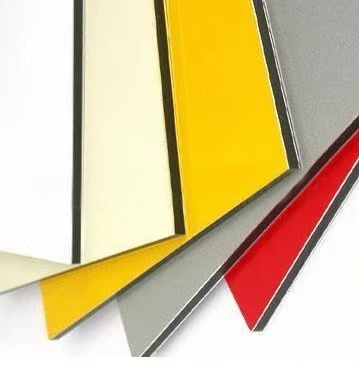
LUCKYBOND Aluminum Composite Panels and their Multilayer Design Brilliance
Alloyed Aluminum + Modified Polymeric Core + Advanced Adhesives: Multi-Layer Protection
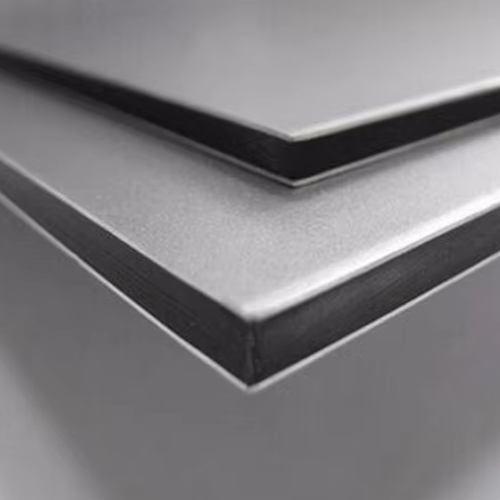
Alloyed Aluminum Panels or Aluminum Composite Panels are weather resistant because their design is multi-layered. The outer layers are Aluminum Skins and they act as a corrosion barrier. The inner layer is a polymer core and it absorbs thermally driven stresses caused by inter-layer temperature differentials as high as 50 °C. The proprietary adhesive interface serves two purposes, it seals the entire assembly as a moisture barrier and it maintains the integrity of the layers, preventing any delamination, even under cyclical freezing and thawing conditions. Due to the integrated architecture of the multilayered design, field tests have shown less than one percent deformation after 10 years across extreme environments, exceeding the industry standard for dimensional stability by over 300% for single material cladding.
Evaluation of the Impacts of Climates on Material Degradation (Arid, Coastal, Tropical)
Every climate has a different approach to weathering. In arid regions such as Arizona, the UV climate has 2.5 times the weathering compared to coastal climates. Arizona Panel QUV tests showed 95% colorfastness even after 5,000 hours of lab UV exposure. Areas with a corrosive salt and moisture, such as a coastal climate, LUCKYBOND panels showed almost no loss of material even after 8 years. For climates that are humid and tropical, the use of mineral cores has shown to be more efficient, in comparison to the use of polyethylene, in the reduction of the maintenance that regards the growth of weathering in the form of organic growth, the adhesion of Fungi, and the structural stability of the core.
Advanced Protective Coatings and Core Engineering: UV, Corrosion, and Moisture Resistance
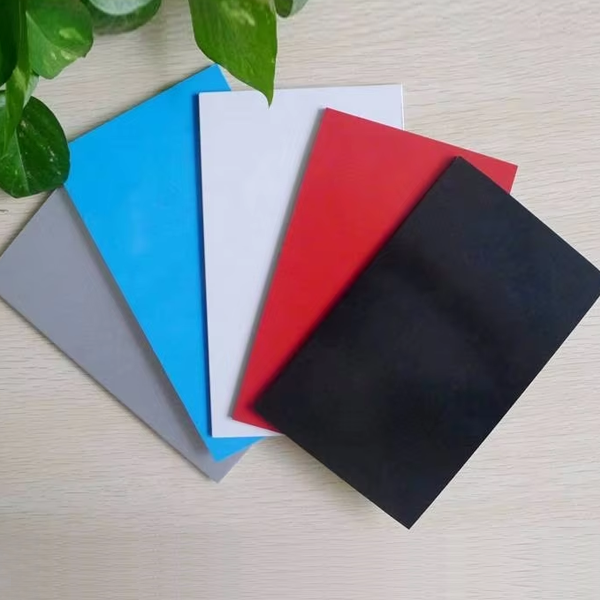
Coatings: PVDF, FEVE, and SD Polyester
The advanced protective coatings combine PVDF, FEVE, and SD Polyester to provide moisture and corrosion resistance while giving long-lasting protection from sun exposure, and high grade UV stability. The coatings provide corrosion and UV protection lasting over 3000 hours of exposure. PVDF coatings provide gloss and SD Polyester coatings provide an economical solution for coatings in metropolitan environments. Coupled with aluminum, they form a moisture barrier. New variants utilizing self-cleaning nanotechnology provide a 30% reduction in maintenance costs in environmentally degrading locations.
Fire Retardant Mineral Core vs. Polyethylene: Prevention of Delaminating and Humidity Resistance
Fire Retardant Mineral cores offer a moisture absorption of less than 0.5%, in a moisture environment of 95% relative humidity, when compared to an absorption of 3% of the Core Polyethyllene. The dimensional stability eliminates the risk of adhesive fail; testing has shown no delaminating after 5,000 cycles of humidity changes. Mineral cores provide a resistance of no growth of mold and also provide a mitgation of mismatch of thermal expansion during freeze and thaw cycles. Fire Retardant Mineral cores when seamlessly coupled with integrated fire sealing systems, provide a promise of mitgration of cores during, high intensity cyclone zones, in cores with a fire rating of non combustible for 7 years, show a failure of cores.
Installation-Critical Sealing Systems for High-Rainfall and Typhoon-Prone Areas Maintain Weather Integrity Over Time
Rainscreen vs. Wet-Seat vs. Dry-Seat Systems: Real-World Testing in Areas Exposed to Typhoon Conditions
The sealing design chosen is crucial for maintaining the weather integrity of sealing systems in extreme conditions. Ventilated cavity rainscreen construction with drainage and pressure-equalizing capabilities offers resistance to wind-driven rain and the ingress of water during typhoons. Wet-seat systems that use marine-grade silicone sealants to provide continuous barriers at joints homework protection from the elements while requiring careful application to avoid adhesion failure. Dry-seat systems that use mechanical sealing compression gaskets provide protection from water ingress and from environmental conditions of the construction site during the curing period.
Guangdong Province Typhoon exposure tests demonstrate clear measurable performance differences among system types:
Rainscreen systems showed a reduction of water ingress of 47% during testing in typhoon conditions of Category 3 when compared to standard systems
Wet-seat systems maintained 92% of their initial waterproofing integrity after 5 years have a single applicatoin when using certified marine-grade sealants
Dry-seat systems showed the greatest resistance to cracking due to expansion and contraction among high-humidity zones
The results of 120 coastal structures show that using a combination of drainage system rainscreens and dry compression gaskets systems results in no delamination and corrosion of 98% of projects impacted by typhoons for over a 10 year period. This combination approach provides protection from water ingress to the system while also providing protection from hydraulic spread to the joins.
Testing for Durability: An accelerated aging test in combination with a 30 year warranty based on climate durability substantiation
How QUV testing (ISO 11341) corresponds to the results of 10 years of service in a sunbelt location
Ultraviolet light aging can be predicted with reasonable accuracy by using a QUV test in accordance with standard ISO 11341. For panels with a unified color retention of 95% after 4,000 hours of a QUV test, the results are unequivocally aligned with the results obtained from a 10 year service life in the sunbelt of the United States. LUCKYBOND is the only manufacturer providing a 30 year warranty for architectural materials based on this empirical correlative evidence.
QUV Test Duration Simulated Field Exposure Color Retention Gloss Retention
Field inspections across Sunbelt regions confirm minimal chalking, fading, or gloss loss—validating lab-to-field predictability.
5-Year Coastal Exposure Trial in Qingdao: Real-World Benchmark
A rigorous 5-year coastal exposure trial in Qingdao—characterized by persistent salt-laden fog and high humidity—provides critical validation for marine applications. Test panels exhibited negligible blistering (≤0.1% surface area) and surpassed ASTM B117 salt spray requirements by more than 2,000 hours. The consistency between lab-accelerated results and real-world performance directly informs warranty terms for coastal projects—ensuring confidence in long-term corrosion resistance.
FAQ
What makes LUCKYBOND aluminum composite panels weather-resistant?
The panels feature a multilayer design with aluminum skins, polymer cores, and a proprietary adhesive interface, which together form a unified barrier against environmental stressors like UV radiation, moisture, and temperature extremes.
How do these panels perform in different climate zones?
In arid zones, special coatings like PVDF protect against UV radiation. In coastal regions, the panels are resistant to salt aerosol corrosion, while in tropical climates, mineral-core variants reduce organic growth and retain structural integrity.
What types of protective coatings are used?
The panels feature advanced coatings such as PVDF, FEVE, and SD Polyester, which provide UV stability, corrosion resistance, and protection from moisture, extending the panels' service life.
Are these panels fire-resistant?
Yes. The fire-retardant mineral cores of these panels make them suitable for high humidity locations without the risk of delamination. They also comply with non-combustible fire codes.
How does sealing contribute to durability?
In the long-term, sealing systems like rainscreens, wet-seat systems, dry-seat systems, etc. help preserve the integrity of the weathering balance of the system. They protect the panels from the environmental effects like delamination and water ingress.