 EN
EN

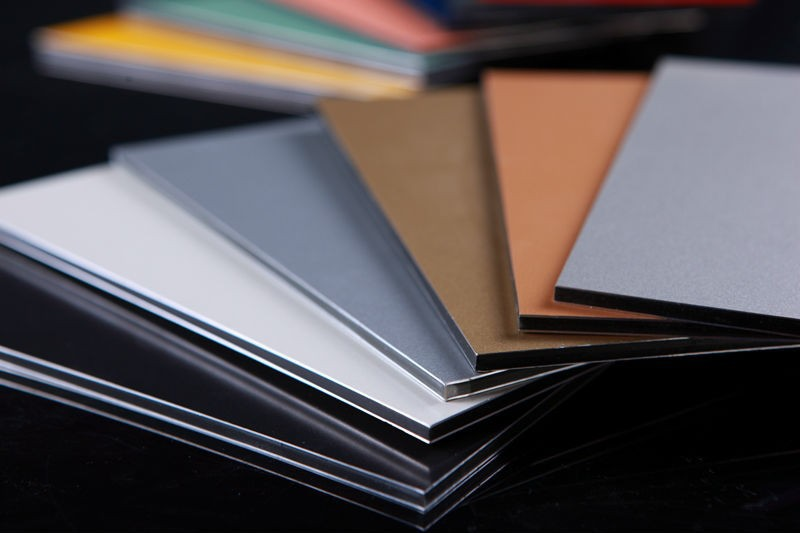
Let's be honest – when you're designing a building façade, color isn't just about looking good. It's about brand identity, architectural vision, and making a statement that lasts. That's where aluminum composite panel color customization comes into play. Standard colors get you in the ballpark, but custom shades are what make a building unforgettable. Over the years at LUCKYBOND, we've seen architects obsess over the smallest hue differences – and honestly, they're right to. A few shades off can change the entire feel of a building. That's why we've built our process around precision, not guesswork.
The Color Systems That Make It Possible
Getting color right starts with speaking the same language as your manufacturer. That's where international color systems come in – and there are three big ones you'll run into.
RAL – This is the European standard, with 2,328 standardized colors (updated in 2023). It's the go-to for architectural specifications across most of the world. RAL 9010 (pure white) and RAL 7016 (anthracite gray) are some of the most commonly specified for façades.
Pantone – The graphic designer's best friend. With thousands of shades, it's ideal for matching brand colors across different materials. If your brand has a specific Pantone code for its logo, we can match it on your custom colored ACP panels.
NCS (Natural Color System) – This one's different. It describes colors by how they're perceived – hue, blackness, and chromaticness. It's more intuitive for designers who think in terms of visual appearance rather than arbitrary codes.
Using these systems eliminates ambiguity. You tell us the code, we measure it with a spectrophotometer, and we formulate a custom coating that matches. Simple in theory – and with the right process, simple in practice too.
How We Actually Match Your Color – The Spectra System
Here's where the magic happens. Our Spectra Color Finishing System isn't just a fancy name – it's a closed-loop, automated process that ensures your aluminum composite panel color customization comes out right, every single time.
A spectrophotometer monitors the wet coating in real time, comparing it to the master standard. We hold our color consistency to a ΔE tolerance of less than 0.5 – and for anyone who doesn't speak color science, that's a variance that's literally imperceptible to the human eye. For context, ΔE is a unit that measures color difference. A ΔE of 1.0 is considered the threshold for visible difference to most people. At ΔE < 0.5, you'd need a lab instrument to tell the difference.
The system controls film thickness, curing temperature, and pigment dispersion simultaneously. Every batch comes with a certification report that documents the measured colorimetric data. That's not just paperwork – it's proof that what you ordered is what you're getting.
| Color System | Number of Colors | Best For | Typical Use Case |
|---|---|---|---|
| RAL | 2,328 | Architectural specifications | Building façades, industrial finishes |
| Pantone | Thousands | Brand identity matching | Corporate colors, logos, marketing |
| NCS | Perceptual model | Visual design thinking | Interior design, artistic applications |
Three Coating Systems – Which One Is Right for Your Project
Here's something that catches a lot of people off guard. The color you want might not be achievable in the coating system you've chosen. Different resins behave differently with different pigments, and that matters for both color and longevity.
PVDF (Polyvinylidene Fluoride) – This is the gold standard for exterior applications. It's incredibly weather-resistant and doesn't chalk or fade over time. But it cures at up to 250°C, which limits the pigments we can use. Bright organic reds and saturated yellows can degrade at those temperatures, so if you're after a vivid custom shade on your custom colored ACP panels, you might need to compromise on longevity or adjust your expectations. Inorganic pigments work beautifully and last decades.
Polyester – More flexible in formulation and cheaper, but UV resistance is lower. It's a solid choice for interior applications or short-life exterior projects where color shift over five to ten years is acceptable. If you're matching a brand color for a temporary installation, this might be the smarter financial move.
FEVE (Fluoroethylene Vinyl Ether) – The bridge between the two. You get PVDF-level gloss and weather resistance at moderate cure temperatures, which opens up a wider range of vibrant pigments. It's becoming the go-to for RAL color matching for ACP projects that need both durability and vivid color.
Here's the key: the color system and the coating system need to be co-engineered – not selected independently. A good manufacturer will tell you what's possible, not just what you want to hear.
| Coating Type | Durability | Color Range | Best Application |
|---|---|---|---|
| PVDF | Excellent – 20+ years exterior | Limited – stable pigments only | Long-term façades, high-wind areas |
| Polyester | Good – 5–10 years | Wide – flexible formulation | Interior, short-life exterior |
| FEVE | Excellent – 15+ years | Wide – vibrant shades possible | High-end architecture, brand projects |
Batch-to-Batch Consistency – Why It Matters and How We Guarantee It
If you've ever seen a building where the panels don't quite match from one section to another, you know how jarring it looks. That's what happens when batch-to-batch consistency isn't taken seriously.
We use spectrophotometry to quantify color deviation from the master standard, and we certify that all custom panels meet a ΔE < 1.0 tolerance. At that level, the human eye can't detect a difference. That's the standard for LUCKYBOND aluminum composite panels across the board – custom or standard.
We also retain wet paint samples and dry panel swatches from every batch. That means if you need replacement panels years later, we can pull the reference and match it precisely. It's a level of traceability that saves headaches down the road – and it's built into our ISO 9001-aligned quality protocols.
Real-World Lessons – What We've Learned on the Job
We've been doing this long enough to have stories worth sharing. One project that comes to mind was a major retail chain rolling out a new store design across 50 locations. They specified a custom Pantone color for the façade panels. Everything looked great in the lab samples. But when the first installation went up, the color looked different – because they'd viewed the sample under office lighting, not the natural daylight the façade would live in.
We learned from that. Now we always provide samples in multiple lighting conditions – and we recommend that architects do the same during the approval process. It sounds like a small thing, but it's saved a lot of rework over the years.
Another lesson: clients often underestimate lead times for custom colors. Standard colors ship in one to two weeks. Custom? Plan on four to six weeks, because we're doing color formulation, physical sample approval, spectrophotometric validation, and batch certification. It's a thorough process – but it's what guarantees you get exactly what you asked for.
Practical Details – MOQ, Lead Time, and Cost
Let's get practical. Custom color isn't something you order casually – there are real commitments involved.
Minimum Order Quantity – For custom hues, our MOQ starts at 500 square meters. That's because we're doing a dedicated production run with specialized setup. We can't just mix a custom color for a handful of panels – the economics don't work.
Lead Time – Plan on four to six weeks for custom orders. Standard colors ship in one to two weeks. The extra time accounts for color formulation, physical sample approval, and spectrophotometric validation. If you're on a tight schedule, factor that in early.
Cost Premium – Custom finishes typically carry a 15% to 30% surcharge over standard options. The exact premium depends on the pigment complexity, the coating chemistry (PVDF costs more than polyester), and the verification steps involved.
Here's my advice: get your color references locked in early – RAL, Pantone, or NCS codes – and send them to us before you finalize your design. Early collaboration saves time, money, and stress.
| Order Type | MOQ | Lead Time | Cost Premium |
|---|---|---|---|
| Standard Colors | 200 sqm | 1–2 weeks | Base price |
| Custom Colors | 500 sqm | 4–6 weeks | +15–30% |
| Custom + Complex Pigments | 500 sqm | 5–7 weeks | +25–40% |
Quick Checklist Before You Order Custom Colors
| Step | What to Do | Why It Matters |
|---|---|---|
| 1 | Choose your color system (RAL, Pantone, or NCS) | Eliminates miscommunication |
| 2 | Confirm coating type (PVDF, polyester, or FEVE) | Determines color and durability options |
| 3 | Request samples under multiple lighting conditions | Prevents on-site surprises |
| 4 | Verify MOQ and lead time | Aligns expectations with project schedule |
| 5 | Approve physical sample before full production | Ensures color match before you commit |
The Bottom Line
Color customization on aluminum composite panels isn't just about picking a shade – it's about understanding the systems, the coatings, and the process that turn a color code into a building's reality. RAL, Pantone, and NCS give you the language to communicate what you want. PVDF, polyester, and FEVE determine what's possible and how long it'll last. Spectrophotometry and batch certification guarantee consistency across every panel. And getting your order details right – MOQ, lead time, cost – keeps your project on schedule and on budget.
At the end of the day, the right color makes a building memorable. The right process makes that color achievable. And when you work with people who understand both, you get exactly what you envisioned.
At LUCKYBOND, we've spent years refining our color customization capabilities. From RAL matching to complex corporate brand shades, we've learned that precision isn't just a technical requirement – it's a promise we make to every architect and builder who trusts us with their vision. Because when color matters, good enough never is.